- Analysing Images, Media and Industry -
On this page we have put up our individual analysis of various documentaries, individuals and topics.
Grizzly Man 'Grizzly Man' is Werner Herzog’s documentary about Timothy Treadwell, a documentarian himself, and his
incredible story of life, and eventual death, with bears in Katmai National
Park, Alaska.
Having devoted his life to protecting and documenting the bears
after a near-fatal drug overdose, Treadwell spent thirteen summers in the park.
At the end of his last summer in 2003 however, he and his girlfriend and
collaborater Amie Huguenard were killed and eaten by a bear. Audio of the
incident was recorded on Treadwell's fallen camera, but not included in the
documentary.
There is however a scene of Herzog listening to
the tape and asking for it to be stopped early. This comes as an emotional
crescendo, and is followed by Treadwell’s own footage of bears fighting, to
exhibit their power and savagery, allowing the viewer to determine the couple's
fate. Treadwell’s commentary anthropomorphises the bears, likening their fights
and relationships to those of humans.
Even though many details are revealed early on,
Treadwell's death is made mystical, legendary even, and Herzog's teases of
morbid details seem to deliberately encourage a shameful fascination in the
viewer. But the refusal to play the tape denies any morbid voyeurism. Charting Treadwell’s own unusual filmmaking
career, the film reveals many of his extended cuts, offering us an insight into
his mental and emotional state. | 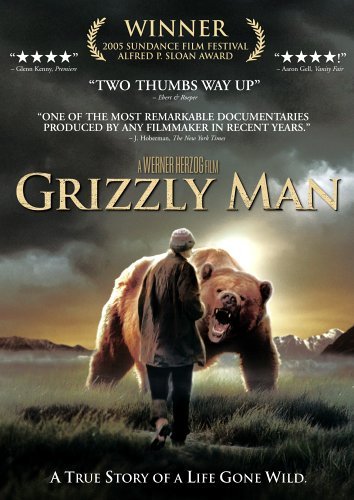 Photo - Source |
Written by - Toby Weller and Graeme Blake
The 4 Year Plan In 2007 Queens Park Rangers Football Club, facing relegation and bankruptcy, was rescued by four high-profile billionaires. Their vision: to take a community of reluctant fans, semi-talented players and a roster of ever-changing managers to Premiership glory. The new owners, risking ridicule and commercial failure, allowed cameras unprecedented access to record the roller-coaster ride. Though they paid for much of the filming they did not control where the cameras pointed or what ended up in the film. One of modern football's most extraordinary stories, told from inside the boardroom, changing rooms and side-lines, the programme features the boardroom battles, telephone conversations, matches and private chats that reveal the inside story of the turbulent and dramatic developments that led to QPR's heroic promotion to the Premier League four tumultuous years later. This documentary is an excellent example of a fly on the wall documentary. We get a real sense of emotion from the good and the bad times. It is a roller-coaster ride and brilliant for all football fans- even those who may only be interested in the 'behind the scenes' of a football club. The use of shoots to convey time passing are used really well through-out and help give the documentary pace and setting. | 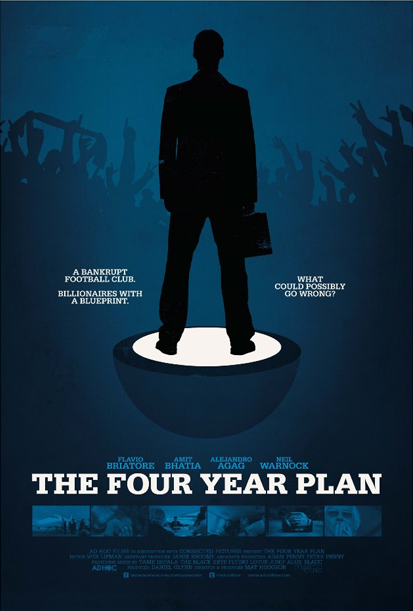 Photo - Source |
The fact that the documentary is shoot over four years needed a mix of transition shoots, which fit in well with the time passing style shots.
Subtitles are used through-out which actually helps to keep the viewer interested as some of the comments made through-out by the foreign owners and managers are quite shocking!
After the long four year journey through the documentary, the result is a rather tense finish, which nobody could have predicted...
The element from this documentary which we will most likely emulate, is the shots used to convey time passing. They are useful fillers and help build a pace in our video piece should we need to drive it on a little.
Written by - Toby Weller
Super Size Me 'Super Size Me' is a documentary which includes elements of drama and comedy to help keep the viewer interested in the film, even though the subject matter is very serious.
The documentary is participatory as we (the viewer) follow a journey exploring the effects that McDonalds can have after eating it as a replacement for the traditional three meals in a day, breakfast, lunch and dinner. This documentary was filmed in America and the star of the documentary was the director, Morgan Spurlock. The participatory side to the documentary makes it more of a fun thing to watch as we're being taken on a journey with the main subject. Spurlock, and independent American filmmaker, is followed for a 30-day period in which he can only have 3 meals a-day from the McDonalds menu and should a McDonalds worker suggest that he super-sizes it, he has no choice but to do so. To begin with, the documentary presents the viewer with evidence that the premise of the film is truthful. The film does this by carrying out medical tests to check Spurlock’s health and weight from the beginning in order to compare the results over the course of time and after the experiment has finished. | 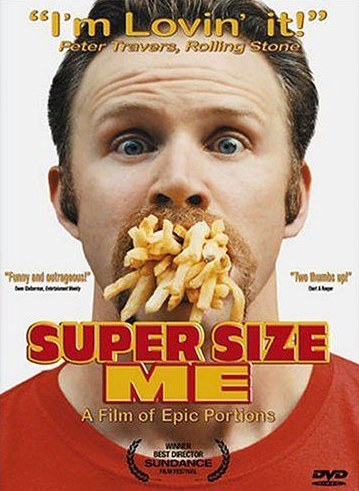 Photo - Source |
Using the participatory documentary style helps to address obesity from the start as we begin with a fully healthy man to a man at risk which results in the doctors asking Spurlock to stop eating the food damaging his health. It not only affects his physical health, but his mental health too as he feels slightly depressed from his weight and lack of diet towards the end of the film.
Schools are also targeted to make a point by Spurlock that people of all ages, especially the young, go to McDonalds because its cheap and fast. But also that young people are not educated enough to eat the right foods.
This whole documentary uses a range of styles and techniques to point out these underlying issues; that it is the big advertising corporations that are using advertising to promote the lie that McDonalds products are good for you, and that you should keep eating and drinking more of these unhealthy meals.
It is not only McDonalds but other corporations too that promote unhealthy lifestyle choices which can result in obesity.
Written by - Toby Weller
Man Bites Dog
‘Man Bites Dog’ is a typical example mockumentary film, which was made in 1992. ‘Man Bites Dog’ was a fiction story about killing people, it was warped by documentary techniques, such as interviews, footages behind the scenes, and full of entertaining. It could be regarded as a genuine experiment of mockumentary.
‘Man Bites Dog’ used to consider as a remarkable but affectation violent film by the media. However, its director Remy claimed that this film was a reflection of documentary realism, violent contents just a technique that easy to be accepted by the general public.
Personally, I sympathise with his view. Taking off the coat of mockumentary, ‘Man Bites Dog’ was an absurd and bizarre story. However, audiences are still willing to believe ‘it happened around us’.
So that is the power of documentary form. It is not the physical reality, but the feeling of truth that consistent with our expectations, experiences or hearsay. For example, if audience are told that ‘North of Nanook’ did the same thing before, when there use documentary techniques like realistic lightings, constant long take, non-dramatic expressions, then they would not have no reason to believe that is absolutely the truth. As long as the modern society gives people the feeling of less safe, only use the natural lightings, long take, handheld, the crew appear behind the camera, realistic blood and brains, expression without dramatic and improvised lines and events, we can be immersed in the feeling of Bonzel really killed one hundred people even children.
Reality? It is just a kind of style.
That is the power where ‘Man Bites Dog’ came from. In ‘Man Bites Dog’, there was a collision between the exactly real form and the non-fictional contents, and it was a great irony to documentary itself. Moreover, the carefully designed scenes, lens, particularly the black humor all fitted the topic of it appropriately.
Written by - Alice Zhu
Pedigree Dogs Exposed
Pedigree Dogs Exposed is a BBC documentary that investigates the health concerns of Britain’s pedigree pets, and how the desire for breed standards, benchmarks judged in competition, is only exacerbating the problem. It is a controversial issue that we should try to investigate for our film. We should try to find breeders who support the idea of breeding for aesthetic appeal, and counter with those who see it as morally wrong to do so, demonstrating a clear conflict. The film also includes interviews with experts, including the RSPCA’s chief vet, Mark Evans. Such testimony is vital for furthering the authority of the argument we want to present, so we would need to find someone suitably knowledgeable to interview. Given that animal treatment is such a highly argued issue, we should be able to find enough experts (from both sides) willing to be included. | 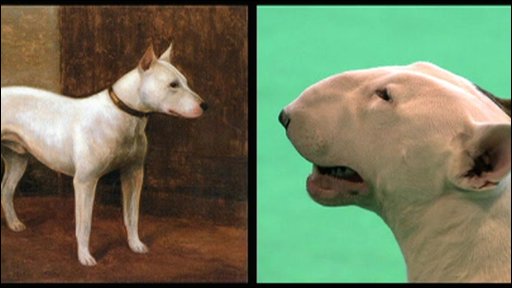 Picture Source |
The BBC’s documentary shows footage of dogs in obvious pain and distress. Such scenes make for heightened emotions, but their inclusion would have to be ethically justified if we encountered anything similar.
For research into our chosen documentary idea, we need to look at many different examples related to our topic. Whereas Pedigree Dogs Exposed is a serious investigation into the unseen side of dog breeding and showing, the mockumentary Best in Show provides and humorously exaggerated and satirical look at it.
It is presented as a genuine documentary charting the progress of five hopeful entrants in a national dog show, as they prepare, train and compete. This is a format we should consider, as it could reveal the drama and conflict between the breeders and let us into their lives on a personal level. This would however rely on us finding interesting characters to include, and getting their permission to be filmed and interviewed.
As a construction, the film has no problem presenting the five entrants and their individual eccentricities, but as regards our documentary, I would expect to find no more than two really interesting competitors to follow, limiting the scope of our film.
At the end is a series of classic 'what happened next' scenes, exploring what each character does following the show. This is a common feature of 'journey' style documentaries, and is something we should consider if ours ultimately takes this format. Hopefully the viewer will be invested in the characters of our film, and want to see what happened to them a month or more later.
Written by - Graeme Blake
Kirby Dick
Kirby Dick is an Academy and Emmy Award nominated documentary
director. His work is often regarded as highly controversial, with his latest
film, "The Invisible War" investigating the issue of rape in the US
military - this was the film that won him the Audience Aware at the 2012
Sundance Film Festival. Released by Cinedigm/Documara, the film had a profound
impact on policy changes in the US military when the Secretary of Defense Leon
Panetta viewed it.
A film I found particularly interesting was his 2009 film
"Outrage" which concerns "outing" American politicians as
gay, who Kirby Dick finds to be hypocrites, because the endorse anti-gay
legislation. It was released both at the Tribeca Festival in 2009 and then
theatrically the same year, and caused a significant amount of controversy due
to it's content. Six politicians were exposed as being gay, most of which
denied it and most of whom where married. Understandably, this caused
considerable questions about the ethics of this film, but it still lured
viewers in. | 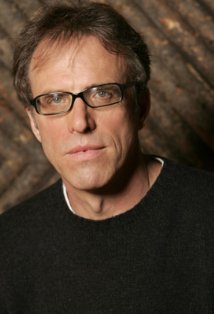 |
Research interests me in particular, as Dick has methodically presented police recordings, interviews, and shows documentary data that his targets really are homosexual. This is a fantastic example of a documentary maker that has been thorough with research, and he has certainly avoided any accusations of libel with the vast amount of evidence he has produced in support of him claims. We understand that this documentary must have been risky to make however. If we were to perform a similar investigation, we would not only have to have credible evidence of our claims, but we will have to be honest with the subjects of our documentary because if we are dishonest about how we intend to portray them, we could be breaking English defamation laws, Ofcom laws and could even be sued for libel.
A common theme in Kirby Dick's work is that hypocrites enrage him. He mercilessly exposed homosexual politicians he perceived as being hypocritical because of their anti-gay policies. In his film "Twist of Faith" released in 2004, he tackled the Catholic Church and its history of sexual abuse.
As much as I admire the boldness of this film; I believe that while we may be competent to handle sensitive issues, this standard of investigative documentary making is so complex and involves so many laws that we believe as a group that we may be on dangerous ground in terms of upsetting the ethics board unless we investigate these laws thoroughly. Kirby Dick is not afraid to attack the industry he works in.
In his 2006 film "This Film Is Not Yet Rated" concerns the Motion Picture Association of America's rating system and its questionable actions and ethics. Again, Dick points out double standards and hypocrisies with characteristic antagonism. Similar to "Outrage", Dick points out the unfair treatment of homosexuals in society, accusing the Motion Picture Association of America of accepting heterosexual material with a lot more ease than homosexual material. Another good example of Dick's talent for investigation, he also found out that the Motion Picture Association of America's members were lying about the people they hire and their circumstances.
The company states that it employs adults who have children aged between five and seventeen, but Dick discovered that many of the employees were either childfree or have adult children. Dick also asserted that the employees of Motion Picture Association of America do not receive training to carry out their work and even went as far as to say the employees are deliberately employed because they are uneducated of both the media industry and child development. Dick also accused both the appeal boards and the ratings boards of the company to be secretive and dishonest.
This film has been shown at various film festivals and gained a positive response, including the Seattle International Film Festival. This bold piece of investigative documentary making is again, inspirational because of Dick's talent for research and getting the most out of his interviewees. However, we will not attempt to be as controversial with our topic, unless all of us research the law, the ethics board and Ofcom rules so that we will not get into any kind of trouble due to insensitive handling of a subject.
In conclusion, although we take into account that Kirby Dick has been successful by persistently making controversial issues, with strong themes of sexuality, hypocrisy and taboo; in order to do this without getting in trouble with the ethics board, we will have to research the law, including Ofcom rules, scrupulously.
- The 9/11 Faker -
The 9/11 Faker is a documentary concerning a woman who gained international fame by pretending to be a survivor of the September 11th terrorist attacks in New York. Tania Head claimed to be one of the nineteen people who were at or above the point of impact of the airplanes, to escape the World trade Centre. The documentary focused on Tania Head's deception and was first broadcast on Thursday 11 September 2008, a fitting time for release, as viewers would tend to watch this while already having 9/11 in mind. However, I believe it was also a controversial move for the Channel 4 to show this documentary on the anniversary of the tragedy, particularly if any of those bereaved by the attacks were watching. This film could easily promote anger and hostility in those who had been directly effected by the events, particularly when showing the content on the anniversary of 9/11, as Tania Head was exposed to have exploited the tragedy for her own personal gain.
The 9/11 Faker was predominantly advertised on television, in the weeks coming up to the anniversary of the September 11th attacks. The advert contained somber, dread-inducing music, as if to warn the viewer that the content of the film would make them uncomfortable, which fits very well with the content - someone lying about surviving 9/11 is generally viewed to be either mentally disturbed or lacking in morality. Seeing a person doing this would make very uncomfortable viewing for most of the audience. The television advert cleverly makes it clear that the documentary is about a woman who pretended to be a 9/11 survivor, but does not say why. This implores the viewer to watch the documentary in order to find out what could have driven a person to exhibit such bizarre behavior, luring them into becoming part of the audience for when the documentary is released on television. We hope to perhaps make our advert a little mysterious as well, not giving away too much about the entire content, prompting curiosity in the viewer.
This documentary was promoted online as well, the advert for it being broadcast online by 4oD and on YouTube. We will use this method in order to target our niche, because we do not have the means to broadcast our advert on television. Online, adverts can also be spread to fellow Internet users easily and for free, and we will be able to coordinate our advertisement successfully on YouTube as this product did. We intend to make a YouTube advert, broadcast it, and then link the video to several Facebook pages, making use of social network advertising. We appreciate that this documentary was a success partly due to the timing of the advert promoting it on television, but we can also learn from this good timing and style of the advert to make ours effective as well.
This documentary was also the first in a new line of the Channel 4 series "Cutting Edge" which already had a large following, receiving some of Channel 4's highest rating. By using such a controversial subject, this film kept the existing customers interest, as Cutting Edge is a television series that usually covers controversial subjects, such as "Anti Social Old Buggers" broadcast in 2005, which included elderly people who had been given an ABSO, "Graham Taylor: The Impossible Job" which concerned England's failure to qualify for the 1994 World Cup and involved a fly-on-the-wall style of documentary which showed the anger of the football team, truly capturing the intensity of the situation. A documentary about a woman who lied about surviving the terrorism in New York would likely appeal to the niche that Cutting Edge aims it's products at: those who are interested in controversy. This made the documentary a success as it appealed existing customers of the Cutting Edge series. From this we can learn that it is important to keep the niche in mind and all times when creating and advertising a product, a reason this documentary was successful.
The documentary itself opens straight away with devastating footage of the 9/11 catastrophes, with eerie, somber music playing over the images, refreshing in the viewer's mind the shock of 9/11. The narrator then explains as more images are shown, but of survivors, that after the attacks, many stories have emerged of heroism, triumph and tragedy. Those viewers who have seen the advert, and who indeed know the title of this documentary know this is a build up to being shown someone lying about being involved, and the images of the devastation of the event invoke anger and awe in the viewer that a person could lie about being involved in something so close to many people's hearts. There is a cut to the woman in question, which is being interviewed by a reporter claiming not only to have survived 9/11, but also to have lost her fiancé in the neighboring tower, which collapsed. This if followed by images of her at conference and marching while holding an American flag, a man with his arm around her in sympathy.
This provokes even more anger and possibly even rage in the viewer, as they know the woman on the screen is lying about something so tragic. This documentary is successful because of this; the lie is so bizarre and unthinkable, that although they may despise the woman on the screen, the viewer is compelled to find out why she would ever do such a thing. We realize that for a documentary to be successful, the characters do not necessarily have to be likeable, and we will take this into account when creating our artifact.
The voiceover is used brilliantly to arouse feelings of anger, disgust and curiosity in the viewer. Before the title of the documentary is revealed on screen, the narrator clearly states to the viewer: "But there was a flaw in Tania's version of that terrible September day, it would prove devastating. When the planes hit the Twin Towers on the eleventh of September 2001, Tania Head wasn't even in New York." The title still is then presented: "The 9/11 Faker"
The voiceover before this shot is an excellent example of effective scriptwriting. It does not offer theories as to why someone would lie about something so serious, and also informs the viewer of the content to firstly, gain the viewer's attention and make them want to find out why and how someone could do this. Secondly, it also serves as a warning to those who may be watching who are directly effected by the tragedy, that the content of this programme may be upsetting or possibly rage inducing. I admire the style of this scriptwriting and we will be remembering this example should be faced with a sensitive or controversial issue in our documentary, in order to fit the script and voiceover around the content tactfully. Approaching content like this also ensures that a viewer will not turn off the documentary in disgust or anger at the film makers, another reason I believe that this documentary was a success.
Although it is the main focus of the film, the documentary does not focus solely on Tania Head, it also respectfully remembers those who have been affected by the tragedy directly, showing archive footage of family members paying tribute to those who died on 9/11. These images and audio in particular of children paying respects to parents they lost that day, immediately creates sympathy for the victims and if the film had not done this, it could be seen as insensitive to broadcast a documentary about 9/11 without mentioning the victims. This is a good example of how to handle sensitive subjects when documentary making, and as our documentary idea is potentially a sensitive subject, we will take note of how this documentary handles sensitive content and be very careful of how we portray it. A shot is also shown of the American flag to promote unity and sympathy with American viewers who the tragedy is close to. However, it could also be argued that this archive footage could also serve to make the viewer of this particular film even angrier with Tania Head, who exploited a situation that affected the lives of thousands.
This documentary also takes into consideration the survivors of the incident, which serves as a plot device in order to explain how Tania Head achieved so much public attention. The survivors of the attacks set up a "Survivors Network" for those who although had survived, were suffering from forms of posttraumatic stress disorder. The documentary captures this by interviewing survivors who suffered from "survivor guilt" and again proves that this documentary is an excellent example for filmmakers about how to handle sensitive content. The victims and their families are taken into account and respected, but also the survivors who were traumatised by the event. We understand that we must be very careful when producing a documentary that involved delicate issues, and this film is a very good example of how to do so.
The way this documentary has handled sensitive issues is definitely a good reason why it has been a success. If the content had have been clumsily handled, or insensitively scripted, it would not have been given the green light from the production company. This documentary also deals with the survivors, the bereaved and even grants Tania Head a little understanding in places (not too much, otherwise this could upset those who were genuinely effected by the incident).
Advertising aside, the style in which this documentary is filmed is also helpful in it's success. It is filmed in clear, crisp style and suitably cold toned for the content. If it had been filmed in a bright, over-saturated style many viewers would have probably not connected as well with the documentary as the colour scheme and content would not work well together. As well as the colour scheme, when the survivors in the film are being interviewed, the shots are usually medium close ups, with the back ground blurry, encouraging the viewer to focus on the angst and trauma shown in the character's facial expressions.
Through this filming style, it is possible to direct the audience to where we want them to look, by having a blurry or uneventful background. This will, connote the message of the documentary, and evoke emotions in the viewer, another reason I believe this documentary was so successful, as because of it's filming style, it had a greater impact on the audience as they could see the pain the survivors had been through in clear focus.
In conclusion, the practice of making a documentary successful depends on several factors. The content in question, the timing and place of adverts released to promote it and the technical competence of the filmmakers when making a documentary. The content must always be handled well, particularly sensitive content, as it will not break any of Ofcom's rules and become green lit. Also, viewers are more likely to watch a documentary from start to finish if the content does not offend them. The timing of the advert is crucial because starting too early or too late can mean that the documentary being advertised if forgotten by potential viewers.
If a date is significant to the content, it is also wise to consider that date. Channel 4 were wise here to broadcast this particular documentary on September 11th 2008 because not only was it significant to the date, but also the way the content was handled meant that viewers would not brand this documentary as insensitive. Although the subject of Tania Head lying about being a 9/11 survivor is indeed controversial, the way the documentary handled it made it fit to be broadcast on the anniversary of 9/11, able to reach their niche of people who were already thinking about 9/11 and those who wish to controversial films, but without offending those directly affected by the tragedy. Finally, the filming and editing style that a documentary employs can make or break it.
The filming style for this documentary was appropriately somber in the colour scheme, portrayed the pain of the survivors well by good use of the camera focus and the archived footage of 9/11 victims makes this documentary a good example of how editing can add to the feel and sentiment of a film. We will be using this documentary as an inspiration as to how we can make our film a success.
- Louise Hart
Guerrilla Marketing
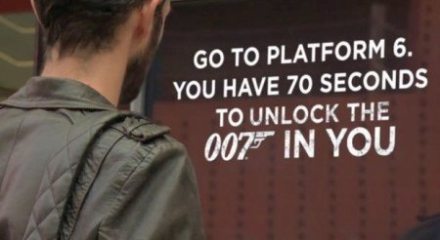 | The term 'Guerrilla marketing' refers to a number of unconventional tactics of promotion, usually favoured by low-budget enterprises on account of their quick and simple implementation. Classic examples include placing stickers or graffiti in prominent locations with either a subtle or explicit reference to the subject being advertised. It's primary purpose is to generate viral interest and 'buzz,' relying on imagination, time and effort more than monetary input. Much of this buzz is picked up and replicated through use of social media such as Reddit and Twitter. |
After noting the success of the technique with small to mid-sized examples, larger companies began taking advantage of it. A recent example was seen during the opening week of the film Skyfall in Stockholm, where Bond fans were unwittingly made part of a Sony advertising campaign that secreted brand new water-proof phones in some of the audience's drinks. The whole charade was entirely in keeping with both the film, and typical cinema advertising.
Guerilla marketing at its best is fun, creative, and subtle enough not to be explicitly recognised as marketing at all.
I'd like us to come up with inventive ways to promote our documentary, and make sure to advertise our method on social media to further the effect. There are plenty of well-used methods like sticker drops and graffiti that would be easy to do initially, then we can work on more inventive ideas unique to our project.
Written by - Graeme Blake
Transmedia Marketing
Guerilla marketing is often linked to the idea of ‘Transmedia marketing,’ where a variety of media platforms are used for promotion, and linked together. One of the best examples is the cross-promotion of the film Prometheus; where the fictional company ‘Weyland Industries,’ was given an incredibly detailed corporate website, videos of imagined technical developments, a 2023 TED (Technology, Entertainment and Design) talk and even a complete corporate time-line. These elements take the form of videos, images, games and interaction via social media. |  |
All this was done months before the film was released, and served to generate massive hype.
A similar approach was taken with the film Cloverfield, and before that the TV show Lost, both from producer J.J. Abrams. The media for these was heavily focused on the mysterious plot elements, and web-trails were left for the inquisitive to follow, discovering new content along the way.
Abrams is no stranger to this form of promotion, having his fictional drink ‘Slusho!’ appear multiple films and TV shows from 2006 to 2009. For Cloverfield though, an entire corporate backstory was created for the product and company, even tying it in to the events in the movie.
These unusual marketing methods may seem unnecessary, but help to add realism and identity to the subject or product being promoted.
Brandon Generator
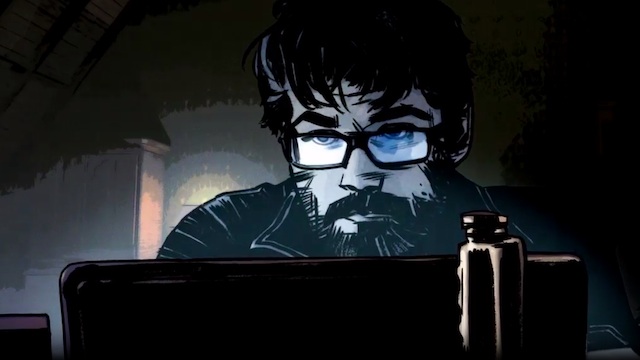 | Brandon Generator is at first glance, an interactive graphic novel about a caffeine obsessed writer struggling for inspiration, and his bizarre journey to find it. After each of the four short episodes, the user is given the chance to contribute to the story via various methods. Leave a message on Brandon's answer-phone, doodle on his notepad, Tweet him, Skype him; or just browse previous submissions for inspiration. |
And the content that isn't user submitted comes from some acclaimed talent; created by writer and director Edgar 'Shaun of the Dead' Wright, illustrated by Tommy Lee 'Batman' Edwards, narrated by Julian 'Mighty Boosh' Barratt and scored by David 'Ocean's 11' Holmes.
It is content so fascinatingly impressive that there just has to be an agenda. And indeed there is, as made clear by the occasional download prompts, the whole thing is sponsored by Microsoft, who are persuading you to download their new Internet Explorer 9 browser, and appreciate their HTML 5 coding language that makes it all possible. And why not? It's an impressive example of media hybridization used to create a less direct form of advertising through original content.
It makes a nice change from traditional advertising, but is still not subtle enough to be any less dogmatic than it. But we could certainly take inspiration from this example, and attempt more undercover forms of marketing, if we can make it suitable for our film.
Interactive Advertising
A fairly new advertising technique in many forms
of industry, interactive
advertising is regularly utilized using online and offline interactive media to
sell products, promote companies and target audiences effectively. The media
industry is familiar with this, and when used it is in effect the media
advertising media. Technology and research company, Forrester, states that by
2016, online advertising spend will be equivalent to television spend
currently. However, Interactive
advertising takes many forms and should not be mistaken to be exclusive to the
internet, although it is common to find this advertising technique in
cyberspace.
Offline interactive advertising methods include direct sales calls to telephones, visits to a person's home (performed by a "door to door salesperson") interactive kiosks with touch screen monitors, interactive television, etc. Telephone calls are the oldest form of interactive advertising, but we will not be engaging in this form of advertising due to firstly, not being licensed or trained to do this, secondly, we do not wish to harass or annoy potential customers by telephoning them at what could be an inconvenient time. Interactive television advertisements involve an advert that contains a means of contact to the company. This type of advertising is very much past our budget so we have decided not to pursue creating this kind of advert for our documentary.
We have therefore decided that, because of our budget, online interactive advertising will be more plausible than the offline method. Online interactive advertising takes many forms, including blogging, email marketing, key word optimization and social networking. Because of the rise in both internet technology and usage, online interactive advertisements have become a popular form of marketing.
Creating a blog is free, and effective - some bloggers even get paid for their services by companies wishing to advertise via them, proving the efficiency of this method of marketing. Almost everyone understand what a blog is, and while we may not be able to advertise on blogs due to our budget, we can certainly set up our own blog promoting our product, and advertise this blog via social networking and email marketing - both of which are free services to those with an internet service provider.
Email marketing refers to the advertising method of sending promotional emails to many internet users. Emails could include information regarding the company, offers and discounts on products, or a website URL. This is a tactic we may employ as with email and the amount of people who use it, we are capable of reaching a wide variety of people who may in turn forward our emails to others, further promoting our product. It also does not exceed our estimated expenses or exhaust our resources. Another advantage of email marketing is that this method is considerably faster than printing out and distributing leaflets, due to time needed when producing the artwork for the leaflets and handing them out which can also be time consuming. However, we will not abandon the idea of producing leaflets to advertise our product because although response rates are often very low with leaflets, it is not expensive to have them produced. However, in regards to email marketing we will take into account that a fair percentage of internet users simply ignore or delete emails that are simply advertising (referred to many email users as "spam") so although we will use this method, we will not rely solely on email marketing to promote our production and find our niche.
Interactive advertising has the advantage of being able to target the intended audience for more carefully. Badly coordinated advertising results in poor sale of the product it is trying sell, possibly a reason why more and more companies are including the interactive approach in their advertising plans. Interactive advertising allows a company communicate directly with both existing and potential customers. It is also usually a very effective way of holding a potential customer's attention.
Social networking is a recent and one of the most significant methods of online interactive advertising. The social networking site facebook, as of September 2012, has over one billion active users - a good place to search for potential customers due to the vast number of people viewing the network regularly. We have already created a facebook group for our production company, and regularly update those we have recruited on the progress of our production. It is free, easy to maintain and facebook groups are known within the world of advertising to quickly grow in volume, something we have taken very seriously into account.
We realise that interactive advertising gives companies an opportunity to become very creative with their promotions. For example, Disney implemented interactive advertising in many of their stores worldwide by placing inside the stores interactive mirrors, which upon first inspection appear to be normal mirrors but then suddenly a computer generated image of a Disney character appears with audio to tell the customer a story.This particular form of interactive advertising is aimed at children to reinforce their interest in Disney characters, and thereby the products. It is also aimed at adults who will be drawn to the products of this particular kind of advertising because they can see how the mere advert itself has pleased their child. We are inspired by how direct this form of marketing is and although we have limited means of producing adverts like this (i.e. we do not have enough money to buy interactive mirrors for our product) we are impressed by how effective, creative and direct the marketing is.
Other examples of offline interactive advertising include interactive billboards that many prestigious companies have released as part of their advertising campaign. Interactive billboards are advertisements that act as television screens, some which recognises movement in the viewer and imitates this, as fashion company Diesel's design did. Other companies such as Adobe Systems Incorporated, Chanel S.A, Foot Locker Inc, etc have made use of interactive billboards.
We appreciate once again, that we certainly do not have the means to produce adverts as expensive and technologically advanced as this, but these adverts all show extensive creativity – something we have learned is highly beneficial to creating an effective advert.
In conclusion, as more company's focus their efforts online, it is becoming critical to the success of a product to advertise it online. We take this very seriously into consideration and are thankful that a lot of online interactive advertising methods are free and easily accessible. The use of the internet is growing consistently, and we as media promoters must take advantage of this fact if we wish to reach our target audience. We also not that this is the most appropriate form of advertising we can attempt to take part in, because we simply do not have the means or the training to create more technologically advanced adverts, such as interactive billboards. We did learn from studying the more advanced adverts from successful companies however, that while technology and an unlimited spending budget is certainly useful in advertising: Creativity is still essential.
Nick Broomfield
Nick Broomfield was born 1948,
London, England. Nick studied film at the National Film and Television School
in London. Broomfield is a documentary maker. Nick uses a similar style to
Werner Herzog who has a mixture of rolls. We see this between Broomfield
documentary about ‘Biggie and Tupac’ 2002 and Herzog ‘Grizzly Man’ and how
these two documentary are about similar subjects.
Nick is shines when he is in front of
the camera and gives us a sense of realism throughout though we would never see
the soundman on camera, which makes Nick different. His under the performative
mode using deceive moment when confronted by the police in ‘Biggie and Tupac’. This
is used to keep realism throughout on the performative documentary. Herzog uses
a sense of realism in his documentaries that Broomfield uses. Werner Herzog is
famously known for being shown in his documentaries such as ‘My Best Friend’
and ’Grizzly Man’.
Nick overall is the perfect example of a documentary maker who likes to experiment and use his primary resources wisely to add depth to his documentaries. Nick Broomfield proved that it is possible to achieve in at an older age in the industry.
Michael Moore
Michael Moore was born in Flint, Michigan April 23 1954. He studied journalism at the University of Michigan-Flint. Michael started working as an editor for the journal of the University he attended at the beginning to his journalism career. He then turned to filmmaking.
Michael made enough money to create his first film, ‘Roger & Me’. This documentary sees Michael attack the corporation company, General Motors (GM) who employed over 30,000 workers before closing the company down to move and pay cheaper wages even though they were making profit. Michael Moore decides to track down the CEO of GM Rodger Smith in this performative mode documentary. He made his first big-hit with, ‘Bowling for Columbine’, which showed the bad points of being able to acquire a firearm in America. During the start of the documentary Moore makes a valid point of how he could easily sign up with a bank to get a free gun. Using the performative mode Moore can not only show his points of view but use the voice of God to put his opinions across. He uses archive footage to stun the audience with the horrors of the massacre of 12 students and a teacher at Columbine High School on April 20, 1999. ‘Bowling for Columbine’ had earned him an Oscar and a big reputation.
Moore is known for unapologetically giving his opinions in public. For that he is not respected by many, who consider him too abrasive. Moore uses documentaries to attack on heartless business corporations, opportunistic right wing politicians and everything that he considers a social wrong. A good one he highlights would be from ‘Rodger and Me’, going against the organisation such as General Motors (GM). Putting in his own opinion here and there will reflect his own bias. Moore has humiliated Charlton Heston in his home who had Alzheimer's disease. This shows Moore’s behaviour to being very unethical and disgraceful which again provokes reactions.
Not only was ‘Bowling for Columbine’, a major standout piece from Michael Moore, but also from this follow up he made ‘Fahrenheit 9/11’. This documentary stood out as a deep and though-provoking insights on the American security system, the level of paranoia, fear, uncertainty, false values and patriotism, which all combined together to set a stage for George W. Bush to launch a war on Iraq instead of focusing on getting the real culprit(s) behind the terrorist attacks of September 11, 2001.
Moore may be hated by the majority but his style to provoke a reaction through anger, humour and sensitive subjects is what makes him standout. An example of how Moore brings out these reactions is shown through archive footage and audio from ‘Bowling for Columbine’, when the shootings at the school happened. He adds his own opinions about the subject which shows how the shooting has affected some Americans. A way that we could go down this dark route from a directors and lighting gaffers point of view would be to use the light in an affective manor to show how we want to portray them. Showing shadow under the eyes will show them to be untrustworthy. We can show both sides in any documentary we make, but we can provoke a reaction for our own reasons to create a hidden bias if we wanted to.
By Toby Weller
http://www.rottentomatoes.com/celebrity/1055159-michael_moore/ Michael Moore
http://www.imdb.com/title/tt0361596/ 9/11
http://www.imdb.com/title/tt0310793/plotsummary Bowling for Columbine
http://www.imdb.com/title/tt0098213/plotsummary Rodger and me
Charlton Heston
