- Documentary Process -
On this page we as a group have written up research on different modes, forms and types of documentary, given examples and have researched new forms of documentary making.
Documentary Modes
Poetic Mode ‘Poetic’ documentaries first appeared in the 1920's and were a more lyrical, fragmentary and abstract way of presenting historical content in documentary form. They moved away from continuity editing and structured images from the material world in a more subjective form, using patterns and associations in terms of both time and space. Traditional narrative content was avoided in poetic documentaries, so key subjects- people and events- became just part of the material world and remained underdeveloped. | Poetic Mode Example - Joris Ivens - Regen/Rain (1929) |
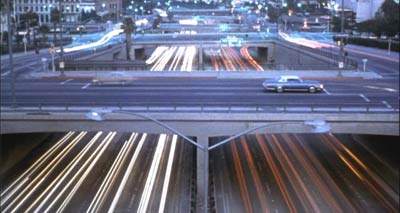  | Koyaanisqatsi (1982) is a perfect example of poetic documentary, where images of life are thrust upon the viewer with no obvious structure. Although elements such as music and editing could be said to offer a narrative interpretation, the barrage of images are presented more or less subjectively. It explores and juxtaposes themes such as life, growth and nature, against artificiality, destruction and industrialisation; human life is juxtaposed with machinery and factory processes, harking back to the modernist mirroring of man and machine in Metropolis (1927), for example. This method of presentation can itself be seen as a comment on our daily lives and experiences. Focusing largely on the world we live in; both literally as a natural planet, and artificially in the ways humanity has changed, used and abused it, we see it as a critique of our species; a highlights (and lowlights) reel. |
Expository Mode 'Expository' documentaries speak directly to the viewer through an authoritative, objective, and omniscient voice- the 'Voice of God' (see below for more.) The narrative of these documentaries is the key factor in explaining and arguing the film's rhetorical content- not the actual images we see- they are only really there to advance the argument. | Expository Mode Example - John Berger's 'Ways of Seeing' (1974) |
Observational Mode 'Observational' documentaries date back to the 1960's where technological advancements such as the mobile, light-weight cameras and portable sound recording equipment for synchronised sound made them possible. They attempt to just simply observe and capture lived life with the most minimal of intervention. The documentary films aimed for intimacy, immediacy and revelation of individual characters in ordinary life situations. | Observational Mode Example - D.A. Pennebaker's 'Don't look back' (1967) |
 | Titicut Follies is a controversial 1967 observational documentary about the patients/inmates of Bridgewater State Hospital for the criminally insane in Massachusetts. After concerns about privacy and patient dignity were raised, it became the only film to be banned from public distribution for reasons other than obscenity or national security. The film finally became publicly available in 1991, and audiences got to see the disturbing content. The mentally disturbed patients are forced to remain naked at all times, and sometimes goaded by the guards. Many scenes highlight the indifferent and sometimes callous treatment by staff. The most memorable shows in detail a patient being held down and force fed via intubation while a doctor smokes away above his head. Despite this, in true observational style, the film remains free from objective discourse via narration or otherwise. |
Participatory Mode Participatory documentaries accept the inevitable interruption of normality caused by the process of documentation, and instead aim to reach the truth by becoming a part of the world they are documenting, asking questions and sharing experiences. These experiences are highly reliant on the honesty of witnesses, and the documentarist will always retain some degree of control over the apparently genuine situations. Great examples of participatory documentaries are those of Bruce Parry; such as Tribe, Amazon and most recently, Arctic. In these films, he typically joins an indigenous group in order to learn about their culture, customs, and integration into the modern world around them. Throughout the series', Parry has taken part in numerous tribal rituals and customs including: being given mind-altering drugs to induce hallucinations, having green tree-frog poison rubbed on fresh wounds and eating a seal's eyeball. | Participatory Mode Example - Bruce Parry and the Bees - Tribe BBC |
Reflexive Mode Dealing explicitly with the process of documentary, 'reflexive' films turn the camera on themselves. Quite literally in Dziga Vertov's Man with a Movie Camera, where many scenes of the filming and editing process are woven into the poetic narrative. ‘Reflexive’ documentaries do not try and hide how they are constructed, they deliberately draw attention to how they've been made, making the audience very aware of the filming, editing and sound. They prompt the audience into questioning the authenticity of what they are viewing and are the most self-conscious of all the modes. | Reflexive Mode Example - 'Man without a Movie Camera' (1929) |
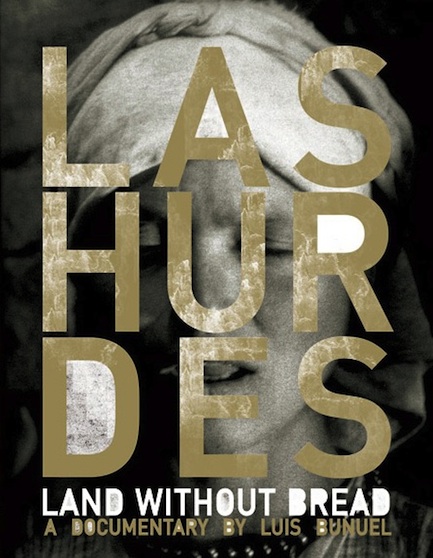 | Some reflexive documentaries, like Dziga Vertov's Man With a Movie Camera share the process of making documentary with the audience, allowing them far more access to their method of construction than the other forms. But some use our expectations and preconceptions to surprise or exploit us. Luis Bunuel's Land Without Bread tells us that there is a town in Spain where bread is unheard of, and where women's age is absurdly accelerated. And absurdly is right. The film was reportedly a subversive and humorously surreal critique of contemporary ethnographic films. Taking advantage of the long-exploited Spanish town of Las Hurdes, Bunuel deliberately exaggerated what he saw in the town, even staging the deaths of animals to support its undeserved reputation. |
Performative Mode 'Performative' documentaries aim to stress a subjective experience and emotional response to their audience. They are deeply personal, somewhat unconventional They are easy to confuse with the 'participatory' mode, The filmmaker is visible to the viewer and free to openly discuss his or her opinions and perspective on the film | Performative Mode Example - 'Super Size Me' (2004) |
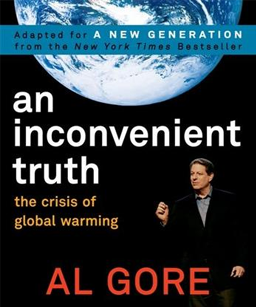 | Davis Guggenheim's semi-biographical An Inconvenient Truth is a highly emotional example of performative mode with a clear political agenda. It uses personal stories from writer Al Gore to encourage a sympathetic response to a subject that is of no direct subjective significance to the viewer. It features aspects of other modes including expositional narration and the participation of Gore, in his political and environmental campaigning capacities. All of the above sections written by - Jess Hallett and Graeme Blake |
Mockumentary
Mockumentary is a type of film or television show in which fictional events are portrayed in documentary format such as ‘Death Of A President’ an enlightening, provocative and controversial Mockumentary. This type of production will use used a current event or issue by using a fictional setting. They can be in either comical or dramatic form.
The common Mockumentary will use a comical approach throughout such as the format for although comedic Mockumentaries are more common.
A dramatic Mockumentary should not be confused with docudrama, in which dramatic techniques are combined with documentary elements to illustrate real events.
Borat is another example of a Mockumentary that has both comical elements along with dramatic components.
Written by - Toby Weller
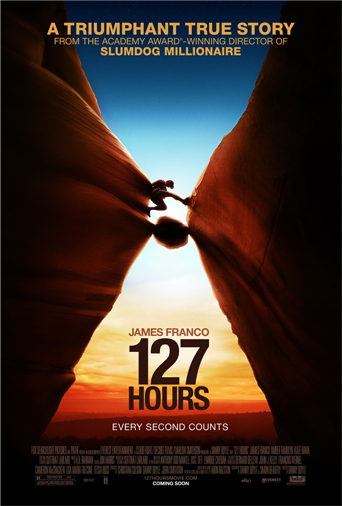 An example of a recent Docudrama. '127 Hours' | Docudrama Research A Docudrama is a film or television show that combines two elements, documentary and drama to form docudrama. They focus on real events and real people presented in a dramatised way to focus the drama element in docudrama. In addition to being filmed, a docudrama can also be written. There are several characteristics which define what a docudrama is. The first is that they tend to stick to the facts as they are known, without offering a commentary. The goal is to give people basic information, allowing them to draw their own conclusions. On the other hand, most documentaries have positional stances and include a narrative which are directly designed to influence watchers and readers. Docudramas are different in that they also tend to use techniques to bring the events discussed to life through drama sequences rather than just stating that person a and person b had a conversation. A docudrama may also include staged footage with actors and depending on what the topic is, little or no proper documentary footage may be used. Some organisations may use docudramas to draw attention to current issues and events. The use of the term “drama” in the form “docudrama” can
be somewhat confusing though, because drama is usually associated with fictional texts. Docudramas don't include fictional elements and remain as true to what they are documenting as possible. Docudramas can make historical events such as the Aztecs and Roman Empire to more modern and more current events feel more accessible to an audience. Many of them tend to encourage discussion and debate by not offering opinions to the viewers or readers, forcing them to talk about the content with each other. Written by - Toby Weller |
Docufiction Research Docufiction is a film genre and the cinematic combination of documentary and fiction. It attempts to capture reality as it appears, but at the same time introduce unreal elements and settings or fictional situations within the narrative to help strengthen the representation of reality. It is a documentary filmed in real time but mixed in are fictional elements. A great example of this is Cynthia Scott's 'The Company of Strangers' 1990. A film depicting eight different women on a bus tour, who are stranded at an isolated cottage when the bus breaks down. The film itself was not tightly scripted – only a basic storyline was written which allowed the eight women to improvise their dialogue using real stories from their own lives to progress the narrative. This added to the overall major theme of the docufiction which was of how each of the women faced aging and mortality in their own ways, finding courage along the way to persevere. In addition to the film and their improvised dialogue, real montages from each of the women’s lives are shown at various points throughout the film. For our own documentary I don't think we would use this method/angle as it feels as though it should be mainly used for proper dramatic films. We're not aiming to produce a drama piece, we are aiming to produce an informative and educational documentary. Yes, we will make our documentary entertaining for the viewer, but I don't think it will be in the same way as Cynthia created 'The Company of Strangers'. Written by - Jess Hallett | 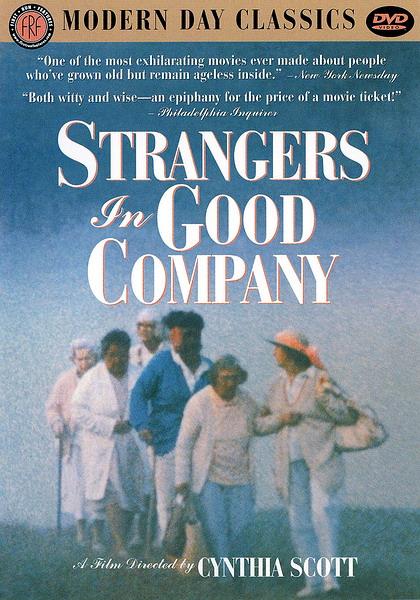 |
The Voice of God is a cinematic technique used within documentary making. The voice is the overseer and the leader of the documentary who guides the viewer through it and adds further context and meaning to the documentary.
One of the best ways this technique is used is through introducing a subject before we see or hear them speak on screen. Also, having the narration track over matching video clips on screen work well to produce a good visual effect.
In one of my favourite documentaries, 'Grizzly Man', documentarian 'Werner Herzog' uses the Voice of God technique.
He uses this technique carefully so that he does not interrupt the footage of Timothy Treadwell on screen. Adding his own ideas and perceptions of how he sees his subjects to give extra meaning to the footage and give his audience questions of their own to answer.
With our documentary idea of investigating Dog Shows, we could perhaps use this technique to help introduce the documentary and the key areas we are covering.
The footage we take, the mode we choose to follow, and whether or not we choose to use archive footage will have an effect on how we use the technique. For example, if we chose to use the participatory mode we could use the Voice of God in the
documentary to help strengthen our Primary's journey.
Written by - Toby Weller
Our own documentary will not be following this form as we will be focusing on investigative documentary making and forming a conclusion at the end. Our eventual conclusion could be seen as biased, but it will not be of a democratic or political form.
Written By - Jess Hallett
Ethnofiction Research Ethnofiction is a term that refers to
‘ethnographic docufiction’ – an experimental ethnographic film genre. Basically
a mixture of documentary and fictional footage (docufiction) focusing on
anthropology, where by the main characters improvise and act out life-experiences
in roles as members of their own social or ethnic group. The research within ethnofiction is mainly intended as a method for ethnographic research and representation using film-making and also to work as a compliment to other methods in social sciences, not just as a stand alone piece. Our documentary will not be in this form as our focus point is not of an ethnic or typical social group. Written by - Jess Hallett | An example of an Ethnofiction film, French Ethnofiction - 'Moi, un noir' 1958. |
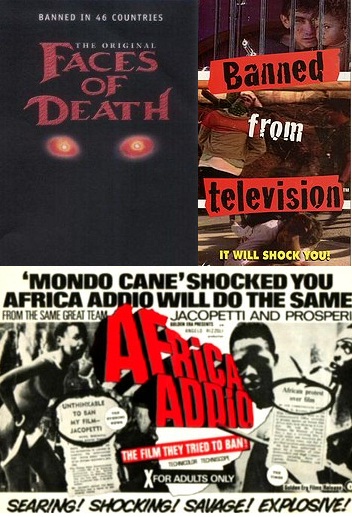 | Mondo Films Literally meaning 'world,' mondo films take their name from the 1962 Italian documentary, Mondo Cane (A Dog's World), and similarly styled films that followed in its wake and adopted the 'mondo' name. They are typically sensational and exploitative in their coverage of sex, death and foreign culture, often claiming staged scenes as genuine. Sometimes criticised for their shocking content, mondo films seek out and voyeuristically show a side of life that is perhaps rarely seen, certainly in more mainstream cinema. Expository in style, with a 'voice of god' narration, the films also take advantage of observational techniques to supposedly capture real-life people and events uninhibited, however unlikely this may be. Taking the form of a collage of thematically connected stories and images, they also share elements of the poetic mode. Mondo Cane in particular foregoes temporal and spatial continuity, in favour of using juxtaposition of ideas and images to create a narrative. These early mondo films often feature aspects of ethnofiction in their endeavour to bring unfamiliar cultures to a domestic audience. However this desire tends to conflict with the genre's inherent exaggeration and distortion of reality, resulting in cultural Othering, and allegations of racism. Now known more as 'Shockumentaries,' from the eighties onward, the focus of these films was almost exclusively violent death, utilising footage of fatalities recorded by amateurs and emergency services, as in 1998's Banned from Television. |
Written by - Graeme Blake
Cinéma Vérité
‘Truthful cinema’, this is a style of documentary filmmaking invented by Jean rouch, inspired by Dziga Vertov’s theory about Kino-Pravda and by Robert Flaherty’s films. It is characterised by the use of real people in unrehearsed situations and settings, filmed in a way that exposes the truth of what is happening. It is also sometimes referred to as observational cinema, if it is only pure ‘direct cinema’ without a narration track on top. Whilst each concept is similar, there are important differences. Direct cinema focuses mainly on recording events in which the subject/primaries and audience become unaware of the presence of the camera, operating in a more fly on the wall ‘observational mode’. In Cinéma vérité films, the Directors would use non-actors, smaller hand held cameras and real settings such as their primary’s homes and surroundings as the main locations for the film. Sets and props were never used in these types of documentaries, and everything was shot on location. For audio pieces, they would tape record real interviews and conversations with people that would express the thoughts and opinions of their primaries and statements made by real people. To go along with these audio clips, they would find images and photos to help illustrate what was being said. It was the goal of the documentary filmmaker to show real life as it truly is, using the film in their own artistic medium. Titicut follies falls under this style also, (view above for more.) Written by - Jess Hallett | 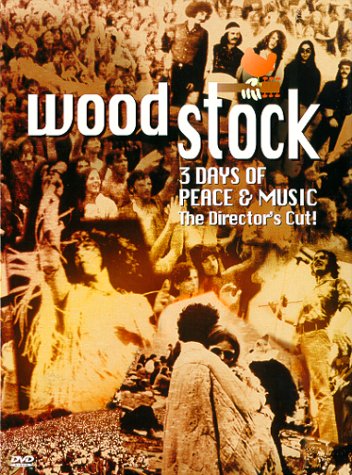 An example of Cinéma vérité - 'Woodstock' (1970) |
'Triumph of the Will' - Analysis of Propaganda in Documentary
It can be argued, that documentaries have been used to promote propaganda for some time. Perhaps one of the most successful and well known pieces of propaganda in documentary format is Leni Riefenstahl's "Triumph of Will" (1935) a film which glorified Hitler and insinuated at the time that he would lead the German people to a better life. The film uses many techniques to get the audience to get the audience to believe this. The film starts with dialogue that is emotionally charged, reminding the German people of how they have suffered after the end of World War One. This clever use of dialogue resonated with most of the German viewers, an excellent documentary technique used to reinforce the audience's opinion on a subject that is important to them. Subtly, this is the only piece of commentary in this film, perhaps implying that the images speak for themselves. The film opens with shots of clouds, the camera drifts through the clouds to float above a gathering crowd below. The purpose of this shot is to portray the beauty of Germany and the new hope the German people are finding in Hitler. The shadow of Hitler's airplane can be seen on the crowd in the next shot, almost in a super-hero manner, implying that he has perhaps come to rescue the German people from their desperation. The music playing during the shot of the plane is Richard Wagner's "Die Meistersinger von Nürnberg" - a clever choice of music, as it is an opera whose story concerns Nuremberg when it was a free imperial city that was thriving during the Renaissance, implying that Hitler will make Germany excel once again should the viewer decide to follow him. The song slowly turns into "Horst-Wessel-Lied" - the anthem of the Nazi Party. The next scene concerns Hitler arriving at Nuremberg Airport, the documentary clearly and deliberately presents us with shots of the large crowd cheering almost fanatically, suggesting to the viewer the unity of Hitler's supporters, and perhaps a possible ostracism from a large force if they do not support the Nazi Party. This feeling is reinforced again when there are shots of Hitler being driven into Nuremberg to be greeted by a large crowd of equally fanatical supporters. The streets are inundated with his supporters, seemingly no matter where the car drives - a clever juxtaposition of shots to suggest that the entire country is behind Hitler, therefore, the viewer should be too. The supporters give the Nazi salute and appear to be cheering with all their strength, showing the viewer that the Nazi Party has given them hope and drive. The shots of crowds religiously supporting Hitler continue well into the night, connoting the true dedication of the Nazi supporters, leaving the viewer believing that Hitler must be worth following considering how thankful and in awe his supporters are of him. During the night rally, a shot of a large sign saying "Heil Hitler" under crucifixes, appealing to the Christian demographic who would have been watching this film at the time (which was most of Germany) - another technique designed to pull the viewer in and coax them into accepting the values that the film is promoting. The next day, there are several long shots designed to promote the unity of Germany in supporting Hitler - the streets of Nuremberg are lined with German flags, conveniently next to Nazi flags connoting the volume of supporters Hitler has, making the viewer feel inclined to support him subconsciously; both for fear of ostracism and the thought that Hitler must be good for Germany if he has won the support of so many Germans. We are then shown shots of some picturesque parts of Germany, as a horn plays in the background, designed to install a sense of patriotism and pride in the viewer. Shots are juxtaposed to show us the crowd excitedly getting ready for the Reich Party Congress, making the viewer feel as though they do not want to be left out of this time in history. Cut to shots of Hitler greeting young supporters, in what appears to be a very genial and friendly manner. In politics, this portrayal of leaders to be empathetic is a very effective trick to use when making a propaganda film, as it leads the viewer to believe that the politician is trustworthy. Cutting to a vast crowd of soldiers, all in Nazi uniform, the camera pans to show them standing to attention, and several shots of soldiers staring in awe, as Hitler makes his way to the podium. Hitler is shown conversing and at one point joking with one of the soldiers, again, the use of shots here is specifically designed to make the politician appear likeable. The film then shows yet another Nazi symbol, followed by Nazi symbols as far as the eye can see - promoting the agenda of the film once again. There is a long shot of the silent crowd after an announcement is made that the Sixth Party Congress is opening. A medium shot pans, showing the Nazi soldiers sitting and listening attentively, connoting the respect that they have for these politicians. The speaker makes a tribute to the deceased Von Hindenburg, the second President of Germany. This reinforces the patriotism that a German in the 1930's would feel while watching this film, as the crowd stands up as a sign of respect. The swastika is shown in the middle of the tribute to Von Hindenburg, who was loved by the German people - a subtle hint that the Nazis equate to their dead President. The speaker even addresses Hitler to be "surrounded by the flags and standards of National Socialism" which shows how the Nazis effectively used their symbols to draw people into their ideology - certainly including this film. The speeches continue, and often the film cuts to shots of the crowd, listening intently, in awe. This is effective as again it portrays the unity of the German people under Hitler, which is likely inviting and appealing to the viewer. The film then cuts to Hitler addressing his troops, who are featured in long shots, close ups and medium shots, promoting the idea that Hitler is a success and there is a powerful force behind him. |  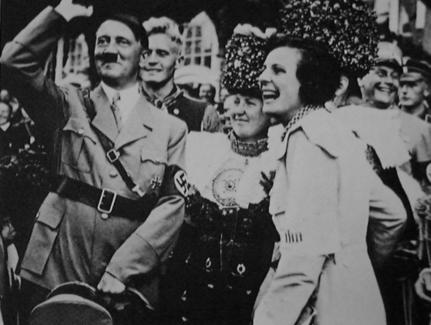 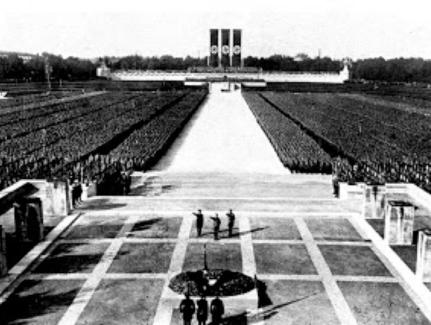 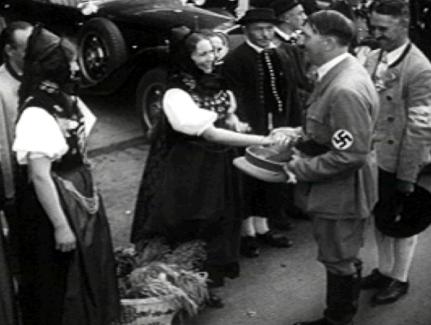 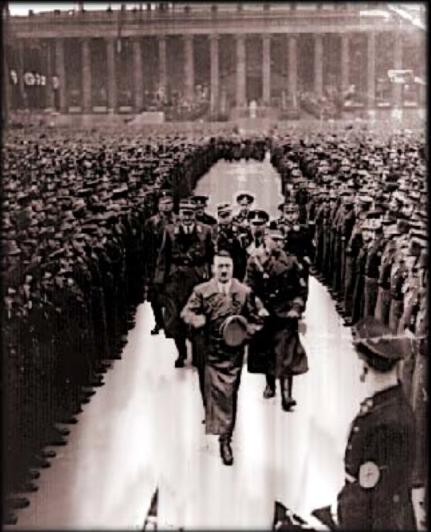 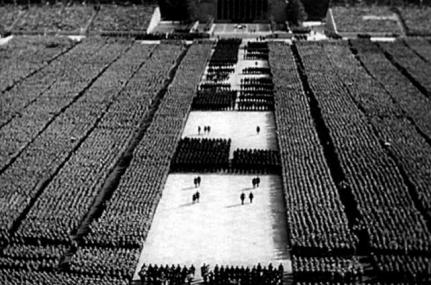 |
Hitler was a very charismatic speaker, capable of rousing vast numbers of people, and this is why there is so much footage of his speeches in this film, to make this propaganda even more effective, to lure the viewer in by introducing them to a powerful speech from the very man the film aims to get the audience to follow. A powerful politician to a German at this time would be a very attractive idea, as Germany had not seen much power in their politics since World War One - a theme the film exploits in order to tempt the viewer in falling for this piece of propaganda.
Triumph of Will is one of the best-known propaganda documentaries of all time. It was well planned to the point of scrupulousness - as Susan Sontag, American political activist asserts:
"The Rally was planned not only as a spectacular mass meeting, but as a spectacular propaganda film."
Hitler, who had pits dug out in front of the speaker’s platform so that Riefenstahl could get the needed angles for the film, considered the film important and tracks were built so that her crew could get traveling shots of the vast crowd. This was done entirely for the film, which shows how effective the Nazis believed propaganda to be.
The power of propaganda-ridden documentaries in media is event in the response to this film. The film was an instant success, and the Independent claimed that:
"Triumph of the Will seduced many wise men and women, persuaded them to admire rather than to despise, and undoubtedly won the Nazis friends and allies all over the world." (2003)
In agreement with the Independent, a man who understands precisely how propaganda documentaries can work was American film director Frank Capra was said that Triumph of Will "fired no gun, dropped no bombs. But as a psychological weapon aimed at destroying the will to resist, it was just as lethal."
However, the film did not have much of an effect on people living outside of Germany. Paul Rotha, a British documentary maker called the film “tedious” and most of the viewers outside of Germany were disgusted at the Nazi sympathies the film clearly holds.
Triumph of Will certainly did not win over the majority of the British people, which brings me to the conclusion that documentaries containing propaganda can be very, very effective - but only if aimed at the correct audience.
Written by - Louise Hart
- Five important things to consider when making a Documentary -
Interviews
The initial part of the interview process is finding the right primary to talk with. Key primaries need to be directly involved with the chosen documentary topic and have at least some solid knowledge on the subject. A good way to find other people to talk to would be through the key primaries – just ask them if they know anybody else who is involved.
So with ours, we will ask our primaries if they know
anybody else who attends Dog Shows or anybody linked to dog breeding or the
judging process of Dog Shows.
With the filming of the interviews themselves there are a few key things to focus upon...
- Our setting for the interview – the background especially will influence how our audience perceives the interviewee. So for example, if we were to interview somebody who is an avid Dog Show goer, behind them should have some reference to that- perhaps their dog’s rosettes pinned to the wall or photos of their show dogs. Maybe even something as small as a dog’s bed (or the dog itself!).
- Framing – the interviewee should fill roughly 1/3 of the screen with their gaze focusing on the ‘negative space’. The camera lens should be the same level as the interviewee’s eye and the interviewer should be asking questions from the same level as the lens, right beside the camera. Different points of view from different interviewees should be reflected in that their angle on the screen changes. Left – against Right – for. There should also be room around the subject, so for example, if they were being interviewed inside a room, they shouldn’t be placed right by a wall or large object, there should be space around them so that their shadow no longer becomes visible behind them.
- Lighting – Always make sure that the light source is coming from behind the interviewer, lighting up the interviewee, and not from behind the interviewee.
- Audio – Never use the camera microphone for capturing the audio in an interview. Always try and use a Marantz or radio microphone, or even a gun microphone to capture the main sound.
- Questions – A good way to go about forming questions is have a list of basic questions that you want to ask, then build upon them by using your interviewee’s answers.
So for example, if our interviewee mentioned something new about Dog Shows, the interviewer would then ask a question related to that to gain further information.
Cutaways (similar to ‘stand alone’ shots in photography/photojournalism work.)
To help flesh out a documentary and also an interview piece, it is a good idea to capture a whole host of cutaway shots. Of anything from a person’s hands holding something to a shot of a poster or moving sign.
There are three main types of cutaways – Story telling shots (e.g. shots of welcome signs, location shots, establishing shots of our main primaries entering or exiting areas/starting activities, etc), Emotional cutaways (e.g. shots of happy dog show winners/sad dog show losers, interactions between dog owners and dogs, injured dogs being treated etc), and General coverage (e.g. basic shots of the environment, people around our interviewees/primaries, our primaries interacting with people, etc).
Each of these cover the different visual areas of the documentary. So for example, it would be good if we could get shots of things such as -
- Exteriors of locations such as
the dog show rings or buildings.
- Wide interior shots of inside
our locations- dog show, dog owner’s house, vet clinic.
- Establishing shots of
interviewee in their interview environment.
- Close up shots of anything
relevant.
- Shots of dogs in a dog show
ring/building.
- Funny shots of dogs and owners.
- Sudden moments such as a dog jumping or barking, person dropping something/falling over - spontaneous moments.
Observational
footage
This type of footage is also often referred to as Cinema Verite (see above for more). This material helps to uncover the emotional part of our primary’s character. If the documentary was only comprised of interviews and cutaways, there is a risk that it could become boring, so observational footage, where the camera is just left running to capture the more spontaneous stuff, is great for adding that extra depth to the documentary piece.
Process Footage
This is the ‘behind the scenes’ footage taken when making the documentary. The type of content which would appear on our online social network profiles and video site profiles. If even used only for a brief moment within the documentary, it helps to give the documentary that extra dimension. It would definitely link in should we decide to follow the Reflexive Mode of documentary film making, but also the participatory should we decide to take part in a dog show/competition with one of our own dogs and film it.
If we find whilst making our documentary that we need to show video footage of something such as a dog breeding farm etc, that we cannot gain access to, we would source free to use archive footage. This allows us to expand our documentary and give the audience a broader view on the topic we are covering. Should we find anything controversial whilst making our documentary, a good thing to do would be to check news archives to see if any stories were reported about the issue. We could then include this in our work as an archive source.
Written by - Jess Hallett
- Research Techniques - (Currently unfinished)
Market Research: audience date; audience awareness; product reach; audience profiling; consumer behaviour; consumer attitudes; competitor analysis; advertising placement; advertising effects
Production Research: content; resources, eg personnel, talent, finance, suppliers, facilities, locations, logistical support; costs; viability; placement, eg publication, broadcast, webcast, podcast; audience; competition
Resource procedures: search methods (subject indexes/search engines), catalogues; loan methods; reservations; borrowing materials; reference only sources; interlibrary loans
Types of research: Quantitative research. E.g. programme ratings, readership circulation figures, website hits, box office figures, sales of merchandise and DVDs. Qualitative research, e.g. film reviews, game reviews, fanzine websites, attitudes to media products (nintendogs?) responses to news products (got loads of links for this) responses to advertising campaigns (RSPCA etc)
Primary resources: interview (face to face, telephone, email) bias in interviewing contexts (order of questioning, interference, influence); observations; questionnaires; surveys; audience panels; meetings
Secondary resources: books; journals; reference-based books and directories; periodicals; newspapers; film archives; photo libraries; internet; audio material; interviews; published statistics (ratings, circulation figures, government statistics); data gathering agencies, e.g. BARB (Broadcasters Audience Research Board)
Written by - Kayleigh-Jayne Towgood
