Photojournalism... Back >>>
- Photojournalism Practitioners -
Emile de Antonio Emile De Antonio (1919 - 1989) was an American
director, who won the Academy Award for Documentary Feature in 1969 with his
groundbreaking film "In the Year of the Pig" (1968) which tackled the
Vietnam War. Antonio has been described as “…the most important political
filmmaker in the United States during the Cold War.” De Antonio took on subjects that were
controversial, one of his first documentaries, "Rush to Judgment"
(1967) explored the assassination of John F. Kennedy, it caused controversy as
it was released a relatively short time after Kennedy's death, and showed clips
of Lee Harvey Oswald, Kennedy's murderer. This was chilling for many American
viewers to watch, and there were also witnesses that gave detailed descriptions
of the assassination itself. Considering the film makes absolutely no use of any music, and consists mostly of interviews, it is understandable why some of the American public found this difficult to watch, it has the feel of a police interview being given to witnesses straight after a murder has taken place. What also adds to this feel is the fact that the film is in black and white, and the shots are fairly un-poetical - the aesthetics of the film are very formal, dark and gritty, seeming to not want to please the viewer aesthetically, but solely focus on educating the audience about Kennedy's assassination. De Antonio also caused controversy when he made no attempt to hide his suspicions that the U.S. government was involved in Kennedy's death: “Lee Harvey Oswald was executed and tried without a defence… this film is his defense.” (Emile De Antonio, 1968). Antonio caused further controversy in 1968, when he directed "In the Year of the Pig" about the causes of the Vietnam War. As America was intervening in Vietnam, Antonio decided to produce a fiercely anti-war film. In contrast to most of America, Antonio believed that Ho Chi Minh was a great leader of Vietnamese people, and the point of his film was to criticise the powers that tried to overthrow him and dissolve his regime. De Antonio used collage techniques in which he used archival footage of the war which he took from unwitting television stations. He conducted interviews but later used patriotic music, which he edited over the interviews with, in a mocking, sardonic fashion. Although De Antonio upset a lot of the general public in America with this film (to the point where he received bomb threats upon the film's release) it was nominated for an Academy Award for best documentary, and he claimed that the documentary was his person favourite in all of his work. If we can learn anything from Emile De Antonio's work, it is that we as filmmakers should not be frightened of causing controversy with our work. Exploring serious issues often comes with the price of controversy, but as creative filmmakers, we should not limit our exploration of a subject simply because we may potentially unnerve viewers. Not only this, but De Antonio has proven to us that even a documentary that provokes hostility in some viewers, can be highly successful, critically acclaimed and widely distributed despite having a negative view of the government. | 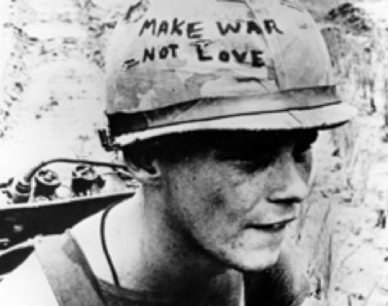 Picture from 'In the year of the pig'. 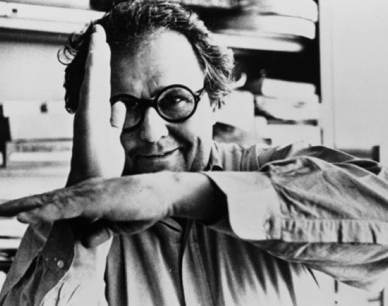 Emile de Antonio |
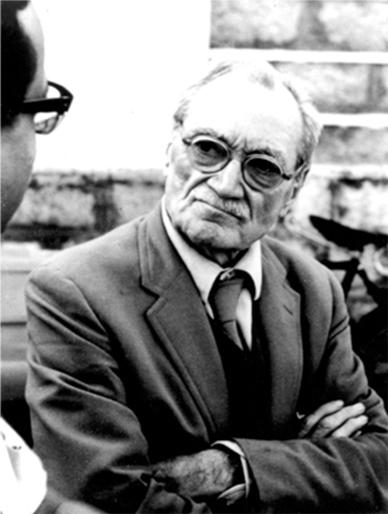 John Grierson 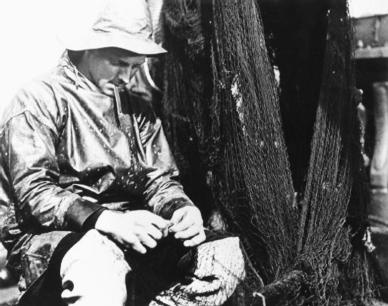 A shot from his film “drifters”. 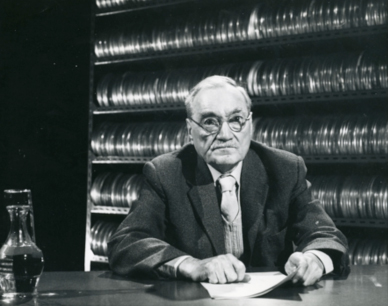 John Grierson involved in the work. | John Grierson Rightly or wrongly remembered as the person who first coined the phrase "documentary" it is no surprise that John Grierson's work in film has been heralded as ground-breaking. Grierson (1898 - 1972) inspired a great many filmmakers during his lifetime and was a mentor to a generation of successful documentary makers. During his career Grierson produced over one thousand film and television programmes, which he used to educate and inform the public and influence their opinions. While studying in 1923 - 1927, his interest in mass communication grew and he realized how effective the media is in giving vast numbers of people information, and how often it could be used to alter ideas and opinions. By making films that did not depend on how well they did at the box office, he saw a chance to raise social and political issues that would not be within the content of a typical commercial film at the time. This gave Grierson the opportunity to claim that his work had a "realist " nature with a sole purpose to present the "truth" to the viewer. Today, this portrayal of the truth has become expected of all documentaries. If a documentary for instance, has been exposed as to have not been entirely honest with it's audience, the general opinion amongst the viewers is that the documentary maker has cheated them, lied to them and their work will forever be deemed as untrustworthy. Robert J Flaherty received voluminous criticism for his film "Nanook of the North", released in 1922, for his deception as he presented his film as reality. Many of the scenes were scripted, the characters were fictional and the film represents the Inuits inaccurately - in several scenes they are shown hunting in a way that their people had not done for some time, and Flaherty instructed the character of "Nanook" to pretend to not understand Western technology. The anger that arose from Flaherty deceiving his audience rose to its peak years after the film had actually been released. Grierson set a standard for what a documentary should be, and I see it as entirely possible that the delayed reaction from the public regarding the dishonesty of Flaherty's film could be because of the standard Grierson set for documentary films. Although he understood that Flaherty had contributed a lot to the world of film, and was happy to work with him on several projects, Grierson was critical of Flaherty - in particular of his exploitation of different cultures, believing that the purpose of film should be to expose the every day life of ordinary people: "Beware the ends of the earth and the exotic: the drama is on your doorstep wherever the slums; are, wherever there is malnutrition, wherever there is exploitation and cruelty." He also was unimpressed by the romanticism of the Russian films being produced at the time, considering them too caught up in the aesthetics of the film and neglecting the content: "The Russian directors are too bound up - too aesthetically vain - in what they call their "play films" to contribute to Russia's instructional cinema. They have indeed suffered greatly from the freedom given to artists in the first uncritical moment of revolutionary enthusiasm, for they have tended to isolate themselves more and more in private impression and private performance." However, even John Grierson, whose films are considered to be accurate and truthful pieces of work, was not immune to restrictions on his creativity. He was reliant on industrial sponsors and government funding which presumably had a say on the subject matter of his films. His work has been accused of having a "public relations exercise" feel, despite his insistence that his work represents reality. Perhaps it does, but only in the subject matter that his sponsors agreed he could represent. John Grierson, regardless of whether his work is as factual as he claimed it to be, is responsible for several codes and conventions of documentary films, still extensively used today. Industrial Britain (1933), was produced by Grierson, and initially directed by Flaherty. Grierson introduced in this film the "voice of God" narrative in which an authoritative voice leads the audience through the documentary, in a manner that does not incline the viewer to question the film's integrity. This style of narration has been present in countless documentaries ever since, and is an example of how John Grierson's style of filming thoroughly influenced generations of documentary filmmakers. Director Alberto Cavalcanti, who had several disagreement with Grierson, describes Grierson's contributions to the film industry as such: "Grierson's achievements can now only be analyzed in perspective. He was basically a promoter. He had little impact as a director or producer, but his flair for finding collaborators, his ease in providing wonderful titles to our worst films, his capacity as a great publicist and above all, his curious background, half Presbyterian half Marxist made him one of the most influential personalities in the movement." |
